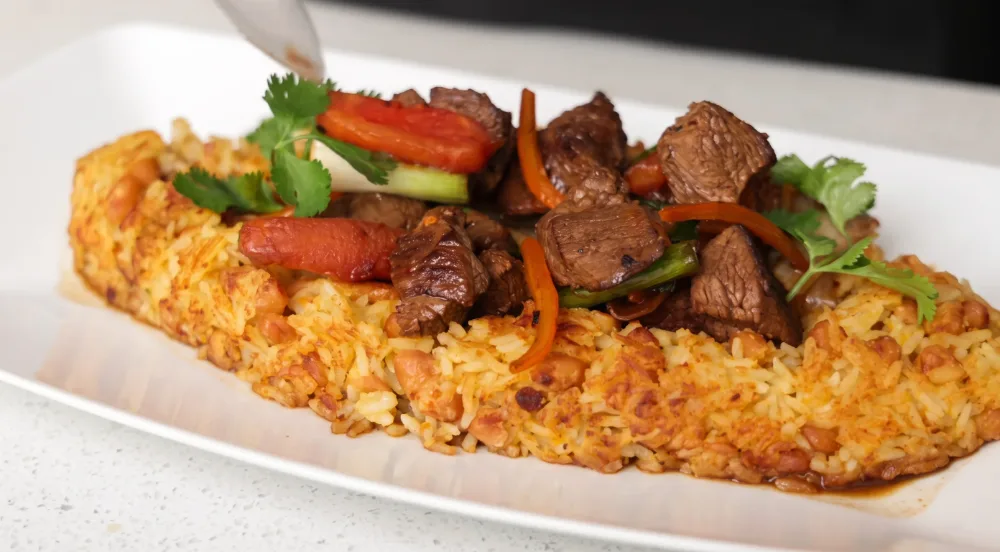
The Story Behind This Dish
Born among Afro-Peruvian home cooks in colonial Lima who refused to let leftover rice and beans go to waste, Tacu Tacu (from the Quechua word takuy, meaning 'to mix and mash together') evolved into a high-art breakfast and late-night culinary spectacle.
A master criollo cook works a hot skillet with generous oil, shaping the bean-and-rice mixture into an oval golden football, flipping it in mid-air until the exterior forms a glass-like crunchy crust (costra) while keeping the interior creamy and steamy. Draped with a thin, sizzling 'sábana' (bedsheet) steak, a runny fried egg, and lime-pickled Salsa Criolla, Tacu Tacu is pure Peruvian soul food.
The Culinary Science of Tacu Tacu
1Retrograded Starch Crystallization
2Bean Legumin Emulsification
Common Mistakes & How to Avoid Them
Make-Ahead, Reheating & Freezing
Make-Ahead Prep
Best Reheating Method
Freezing Guidelines
What to Drink with This Dish
Step-by-Step in Photos: Mastering Traditional Peruvian Tacu Tacu con Sábana de Lomo
Follow along with our kitchen test photos to master the exact sizzle, color development, and sauce reduction at home.
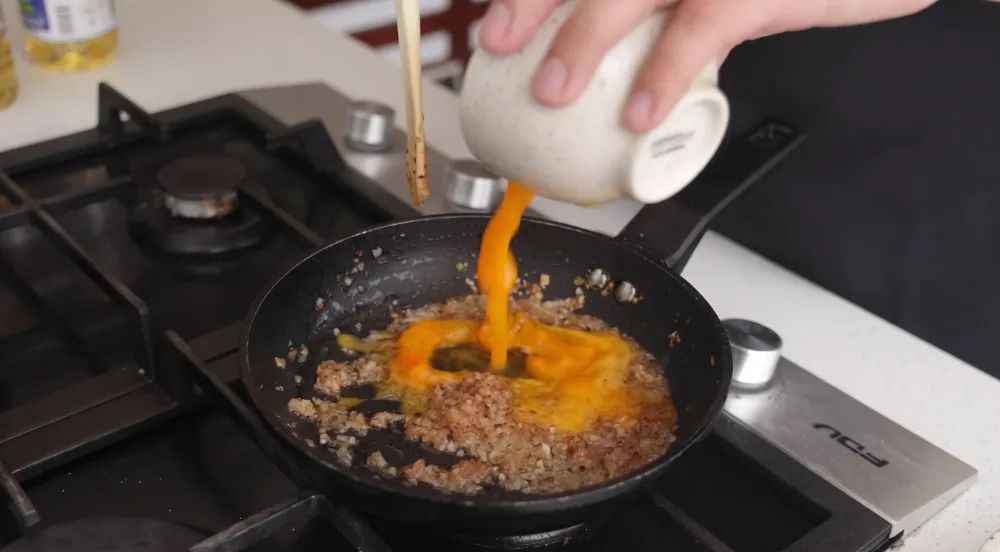
Building the Ají Amarillo Onion Aderezo
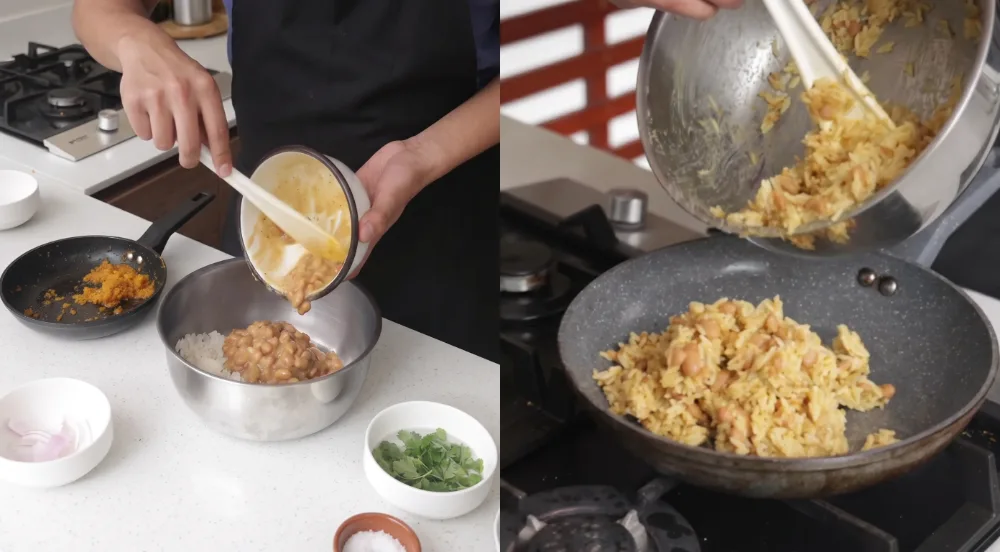
Mashing Canario Beans and Cold Rice
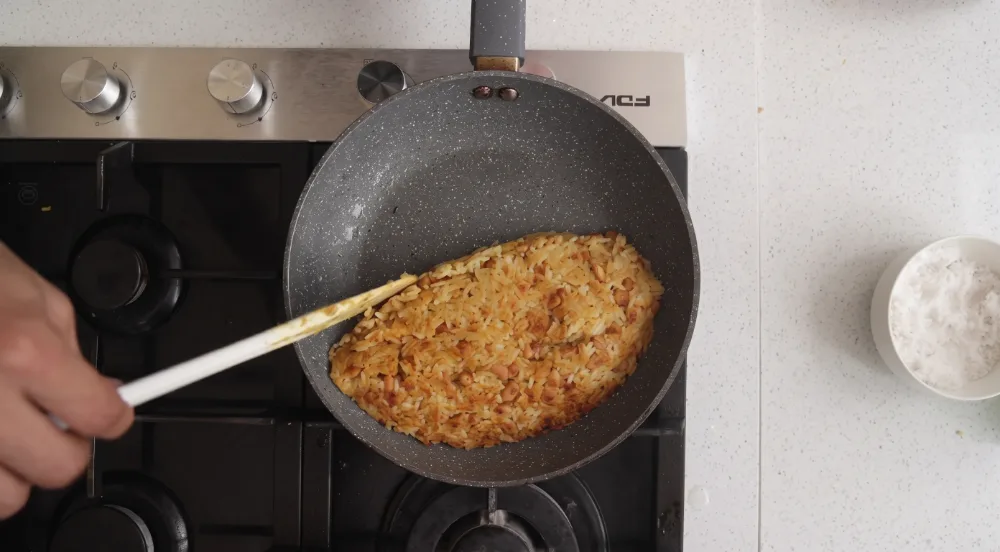
Forming the Crispy Torpedo Crust in the Skillet
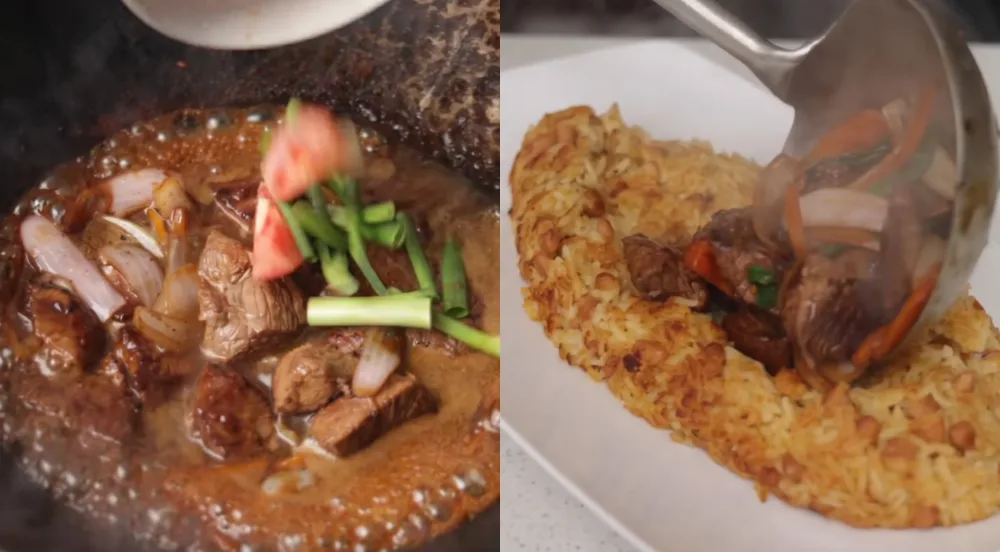
Draping with Sábana Steak, Fried Egg & Salsa Criolla
Peruvian Ingredients in the US: Where to Buy & Easy Substitutes
Cooking authentic Peruvian food in the United States is easier than ever! Most signature ingredients are readily available at major supermarkets, Latin grocers, or online. Here is our tested guide for American home cooks:
Traditional Peruvian Tacu Tacu con Sábana de Lomo
Recipe by The My Peruvian Kitchen Team
Ingredients(Check items off as you cook)
- 2 cupsCooked Peruvian Canario (or Mayocoba) beans with cooking liquid(Mashed lightly with a fork so half remain whole)
- 2 cupsDay-old cold cooked white rice(Cold rice holds its structure in the skillet)
- 1 mediumRed onion, finely minced
- 3 clovesGarlic cloves, minced
- 3 tbspAjí Amarillo paste
- 4 tbspVegetable or lard oil (for frying the crust)
- 4 steaks (about 1.25 lbs)Thin sirloin steaks (sábana de lomo), pounded to 1/4-inch thickness
- 4 large eggsFresh large eggs (for fried egg topping)
- 1 cupRed onion, lime juice, and cilantro (for fresh Salsa Criolla)
- 1 tsp eachDried oregano, ground cumin, salt, and black pepper
Step-by-Step Instructions
- 1
Build the Flavorful Criollo Aderezo
Heat 2 tablespoons of oil in a large skillet over medium heat. Sauté the finely minced red onion with 1/2 teaspoon salt for 6 minutes until sweet and translucent. Stir in the minced garlic, 3 tablespoons ají amarillo paste, 1/2 teaspoon cumin, and 1/2 teaspoon oregano; cook for 3 minutes until fragrant.Chef's Pro Tip: A concentrated aderezo is the secret that elevates plain leftover rice and beans into restaurant Tacu Tacu. - 2
Mix and Mash the Beans and Rice
Add the 2 cups of cooked canario beans and 2 cups of cold rice directly into the skillet with the aderezo. Use a wooden spatula or potato masher to crush about half of the beans while mixing vigorously, letting the starches release and bind the rice into a cohesive, thick dough. Remove from heat and divide into 4 portions.Chef's Pro Tip: Mashing half the beans releases amylose starches that hold the Tacu Tacu torpedo together without falling apart. - 3
Shape and Sear the Golden Crispy Torpedo (Costra)
Heat 1 tablespoon of oil in an 8-inch non-stick skillet over medium-high heat. Add one portion of the bean-rice mixture, pressing it against the sides and rolling the pan to shape it into an oval torpedo. Cook undisturbed for 4 to 5 minutes until a deep golden, crackling crust forms on the bottom. Flip carefully (or toss in the pan) and fry the other side for 3 to 4 minutes until crispy all around. Repeat for remaining portions.Chef's Pro Tip: Do not move the mixture during the first 3 minutes; high heat creates that signature crunchy glass-like crust. - 4
Flash-Sear the 'Sábana' Steaks and Fry the Eggs
Season the pounded thin steaks with salt, pepper, garlic, and cumin. In a smoking-hot skillet with 1 tablespoon oil, flash-sear the steaks for just 60 to 90 seconds per side until browned yet juicy. In a separate pan, fry the eggs sunny-side up with runny yolks.Chef's Pro Tip: Pounded thin steaks cook in under 2 minutes—keep the heat screaming high to prevent overcooking. - 5
Assemble and Serve with Salsa Criolla
Plate each hot, crispy Tacu Tacu torpedo on a wide dish. Drape the sizzling steak ('sábana') across the top, crown with a fried egg, and top generously with fresh lime-marinated Salsa Criolla. Pair with our creamy Authentic Peruvian Ají de Pollería on the side!Chef's Pro Tip: Break the runny yolk over the hot crispy crust before taking your first forkful!
Nutrition Facts
4 servings per recipe • Amount per serving
* Percent Daily Values are based on a 2,000 calorie diet. Your daily values may be higher or lower depending on your calorie needs.
© 2026 MyPeruvianKitchen.com. Tested and published for home cooks. All rights reserved.
Expert Answers for Traditional Peruvian Tacu Tacu con Sábana de Lomo
The My Peruvian Kitchen Team
Our culinary team brings together passionate native Peruvian cooks, culinary educators, and food writers. Our mission at MyPeruvianKitchen.com is helping US home cooks master authentic, restaurant-quality Peruvian dishes with ingredients easily found in American grocery stores.