MyPeruvianKitchen.com

MY PERUVIAN KITCHEN

AUTHENTIC PERUVIAN RECIPES · ADAPTED FOR US HOME COOKS

HomeRecipesSeafoodPeruvian Ceviche Mixto (Mixed Seafood & Fish Ceviche)
Seafood

Peruvian Ceviche Mixto (Mixed Seafood & Fish Ceviche)

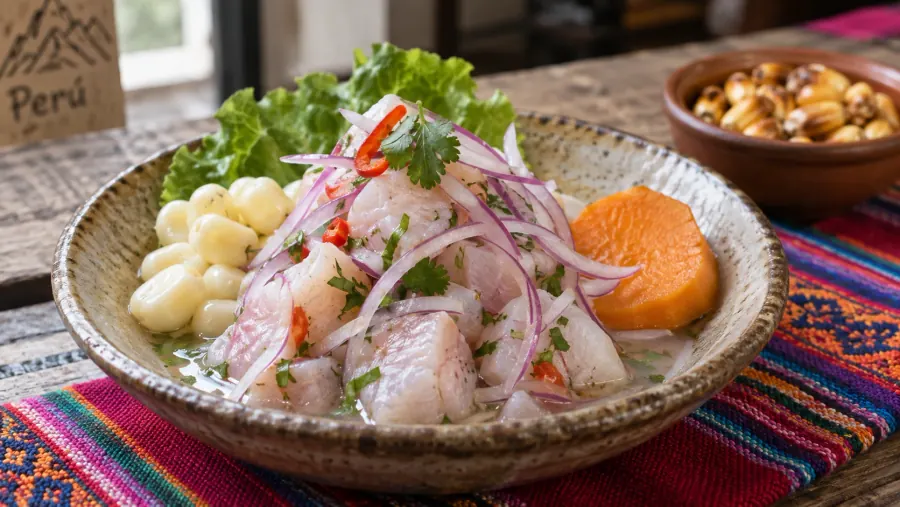
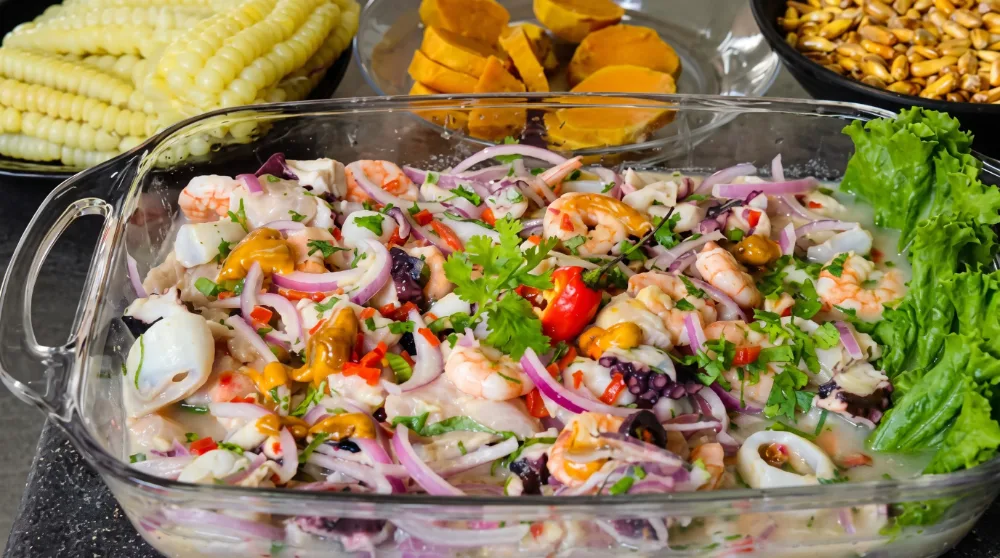
Tender fresh white fish, poached calamari, shrimp, and octopus in a velvety Leche de Tigre with celery, garlic, and ají limo.

Recipe by My Peruvian Kitchen Culinary Team
•
4.98(38 reviews)
Authentic Peruvian Peruvian Ceviche Mixto (Mixed Seafood & Fish Ceviche) - Traditional Homemade Recipe

The Story Behind This Dish

In Lima and the port of Callao, Ceviche Mixto is the ultimate celebration of the Pacific Ocean's bounty. While traditional Ceviche Clásico showcases pristine white fish alone, master cebicheros created the 'Mixto' to highlight the contrasting textures of tender octopus, sweet shrimp, and chewy calamari rings. The secret of the finest coastal cevicherías lies in the aromatic backbone of the Leche de Tigre: blending a hint of crisp celery and garlic with fresh fish trimmings to produce a naturally thick, ivory emulsion that coats every piece of seafood. Always served ice-cold alongside sweet glazed camote, giant choclo corn, and toasted cancha, it pairs impeccably with an icy glass of Authentic Chicha Morada or a refreshing Pisco Sour.
The crown jewel of coastal Peruvian cebicherías: delicate cubes of fresh sashimi-grade white fish tossed with tender poached calamari, succulent shrimp, and tender octopus coins in a vibrant, restaurant-style Leche de Tigre. Infused with a subtle aromatic base of fresh celery, garlic, and Peruvian ají limo, this Ceviche Mixto achieves the perfect velvety emulsion without heavy marinades. If you love our Traditional Peruvian Ceviche Clásico, this mixed seafood version elevates texture and flavor to a whole new level.
Culinary Food Science

The Culinary Science of Authentic Ceviche Mixto

1Celery & Fish Protein Emulsification

Adding finely grated celery (apio) introduces natural pectin and aromatic compounds that, when swirled with fish albumin proteins and cold citrus acid, bind into a stable, velvety Leche de Tigre emulsion rather than watery lime juice.

2Why Shellfish Requires Flash-Poaching

Unlike delicate fish muscle fibers that cure quickly in cold citric acid, cephalopods (squid, octopus) and crustaceans (shrimp) contain dense collagen networks. Raw acid makes squid leathery; flash-poaching at 212°F (100°C) relaxes collagen within 60 seconds, and the ice bath freezes that tender texture before it meets the lime.

3Ice Cube Temperature Stabilization

Keeping the ceviche bowl at 32°F–34°F (0°C–1°C) prevents enzymatic breakdown of the fish. Cold fish maintains a firm, translucent bite while absorbing the lime marinade evenly.
Troubleshooting & Fixes

Common Mistakes & How to Avoid Them

Issue:My calamari or shrimp turned tough and rubbery.
Why this happens: Overboiled past 90 seconds or left to sit hot without an immediate ice water bath.
The Fix: Boil for exactly 60 to 75 seconds and immediately plunge into a bowl filled with ice and water.
Issue:The Leche de Tigre has an unpleasantly bitter, astringent aftertaste.
Why this happens: Limes were over-squeezed with a heavy squeezer, extracting bitter limonoid oils from the white pith.
The Fix: Squeeze limes gently with your fingers, stopping once half the juice is released. Discard the remainder.
Issue:The ceviche is watery and lacks restaurant creaminess.
Why this happens: Seafood was not dried after boiling, or fish was not salted with celery before adding lime.
The Fix: Pat boiled seafood completely dry and toss fish with salt, celery, and ice for 30 seconds before pouring in lime juice.
Prep & Storage Guide

Make-Ahead, Reheating & Freezing

Make-Ahead Prep
The calamari, shrimp, and octopus can be poached, ice-shocked, dried, and refrigerated in an airtight container up to 12 hours ahead. The sweet potato and choclo can also be boiled in advance. Always cube the fresh fish and assemble the ceviche right before eating.
Best Reheating Method
Never reheat ceviche; it is an ice-cold, fresh seafood preparation.
Freezing Guidelines
Do not freeze prepared ceviche as the lime acid and freezing destroy the delicate texture of the fish and seafood.
Chef's Leftover Transformation:Pour any remaining Leche de Tigre into shot glasses with a dash of pisco or vodka and a sprinkle of chopped cilantro for a restorative 'Ceviche Shooter' (Levanta Muertos)!
Beverage Pairings

What to Drink with This Dish

Cocktail
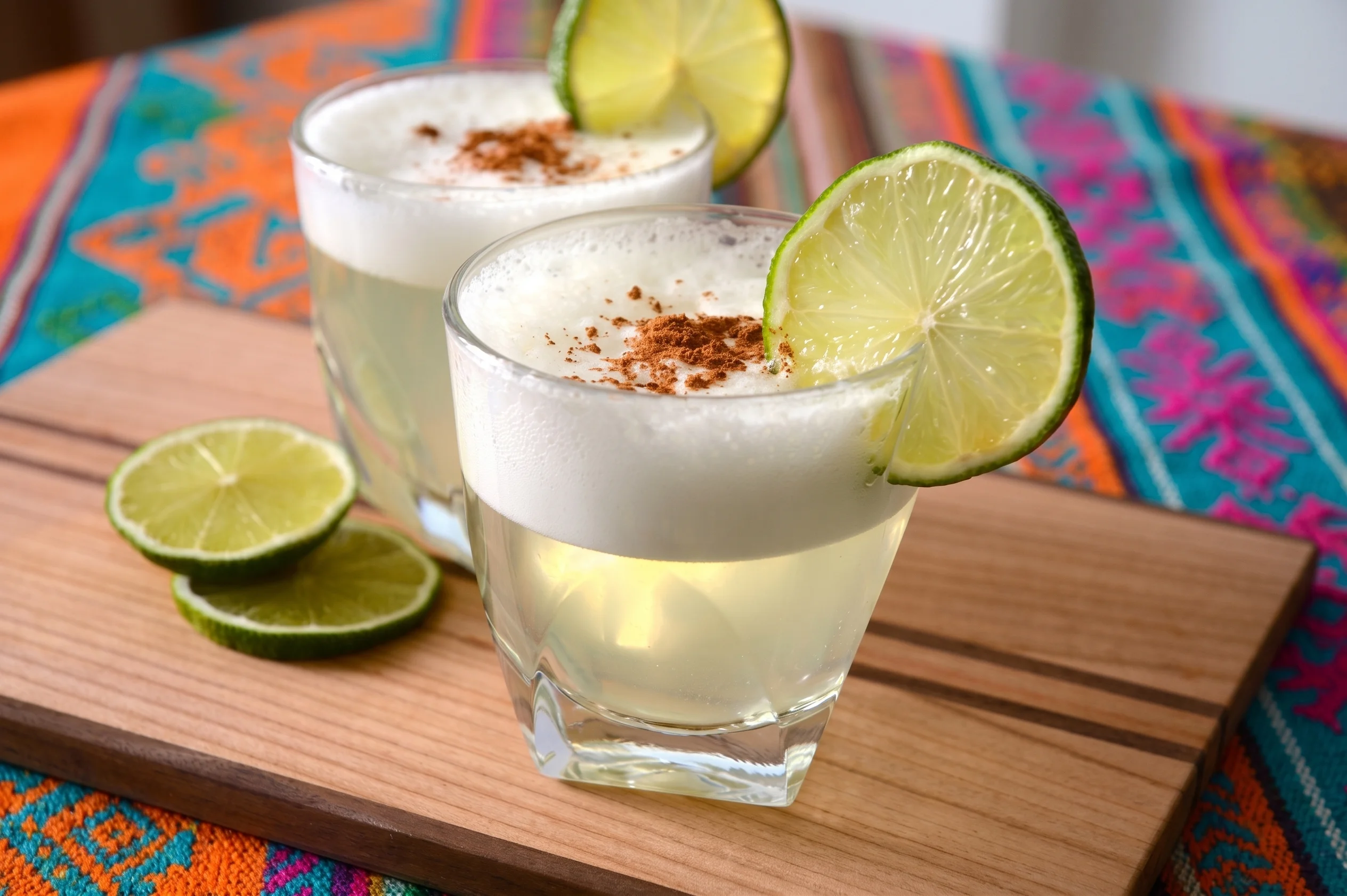
Pairs exquisitely with our classic Peruvian Pisco Sour or a crisp Chilcano de Pisco.
Wine or Beer
An ice-cold Peruvian Pilsen Callao lager, Cusqueña Dorada, or a crisp dry Albariño / Sauvignon Blanc.
Non-Alcoholic
Chilled homemade Authentic Chicha Morada or sparkling limeade.
Visual Cooking Masterclass

Step-by-Step in Photos: Mastering Peruvian Ceviche Mixto (Mixed Seafood & Fish Ceviche)

Follow along with our kitchen test photos to master the exact sizzle, color development, and sauce reduction at home.
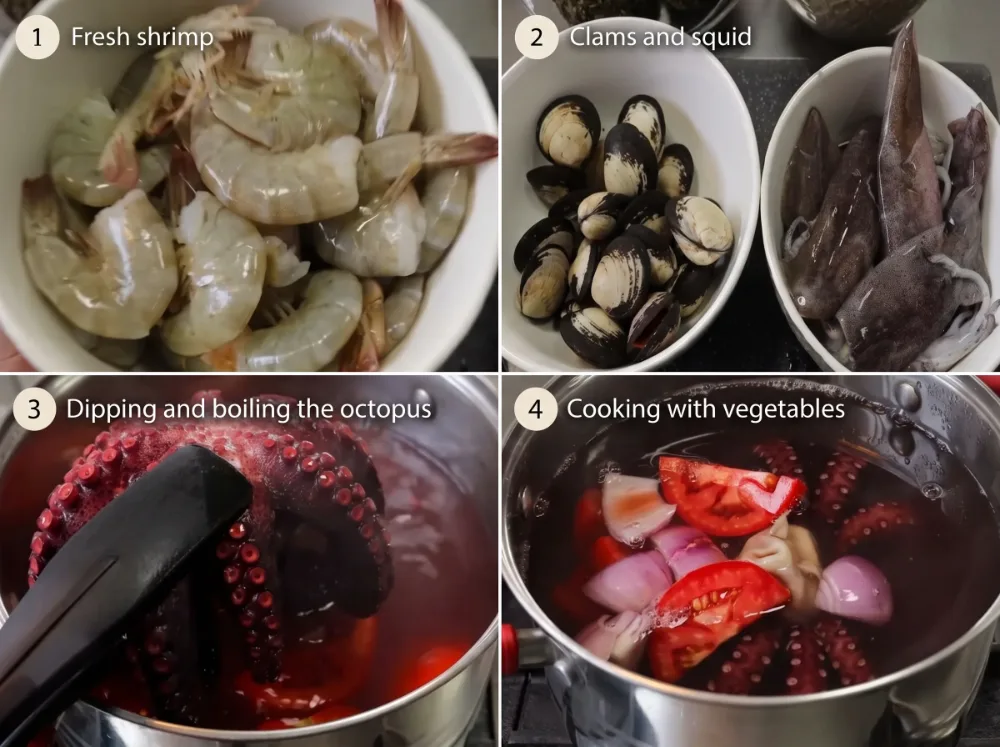
Step 1: Flash-Poaching & Ice-Shocking Calamari, Shrimp & Octopus
Step 1
Pin

Flash-Poaching & Ice-Shocking Calamari, Shrimp & Octopus

Quickly blanch shrimp and calamari in salted boiling water for 60-75 seconds, then plunge into ice water to seal in tender bite, pairing with sliced octopus.
Chef's Pro Tip:Dry the seafood thoroughly on paper towels so water doesn't dilute the lime cure.
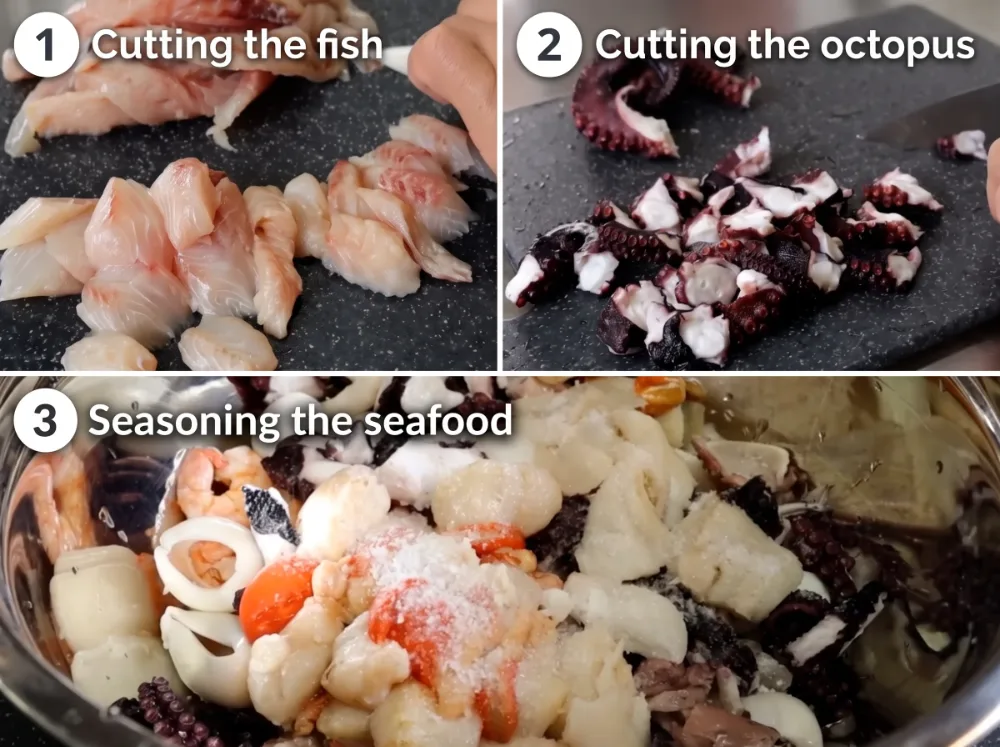
Step 2: Cubing Fresh Fish & Building Aromatic Celery-Garlic Base
Step 2
Pin

Cubing Fresh Fish & Building Aromatic Celery-Garlic Base

Cube cold white fish into 3/4-inch pieces and toss with sea salt, crushed garlic, grated celery, and ice cubes in a chilled bowl.
Chef's Pro Tip:Salting the cold fish before adding lime juice draws out proteins that create a thick, velvety Leche de Tigre.
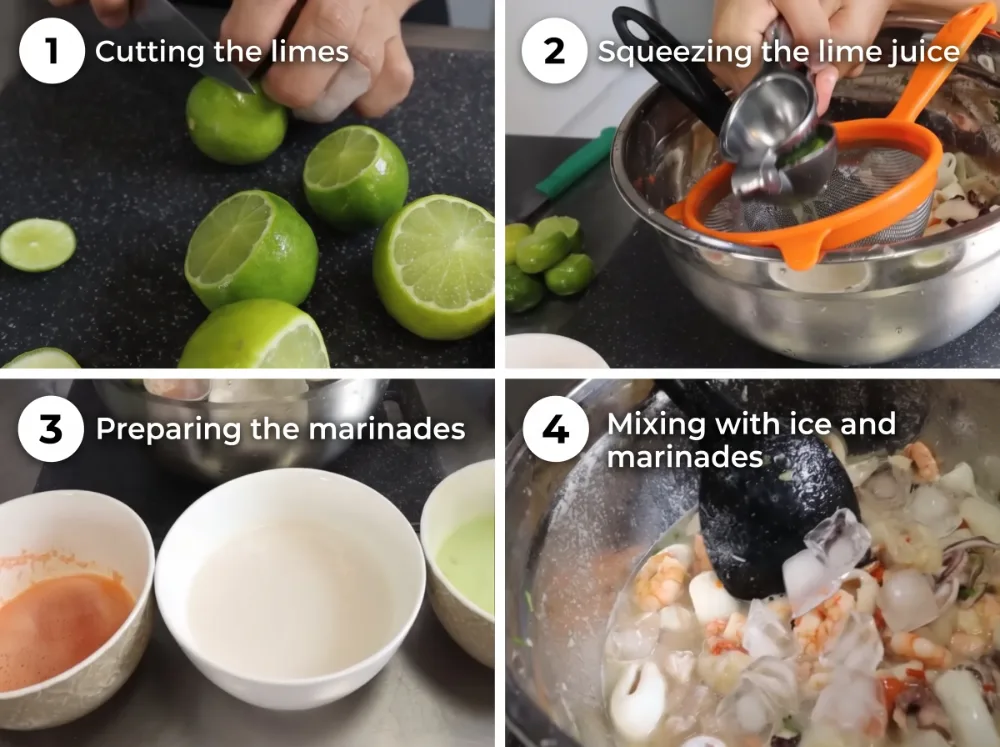
Step 3: Hand-Squeezing Limes & Whipping Ivory Leche de Tigre
Step 3
Pin

Hand-Squeezing Limes & Whipping Ivory Leche de Tigre

Gently squeeze fresh limes by hand directly over the fish, tossing in circular motion with minced ají limo and cilantro until the juices turn creamy.
Chef's Pro Tip:Squeeze limes only 60% of the way to avoid bitter essential oils from the white pith.
Step 4: Folding in Poached Seafood, Crisp Onions & Plating
Step 4
Pin

Folding in Poached Seafood, Crisp Onions & Plating

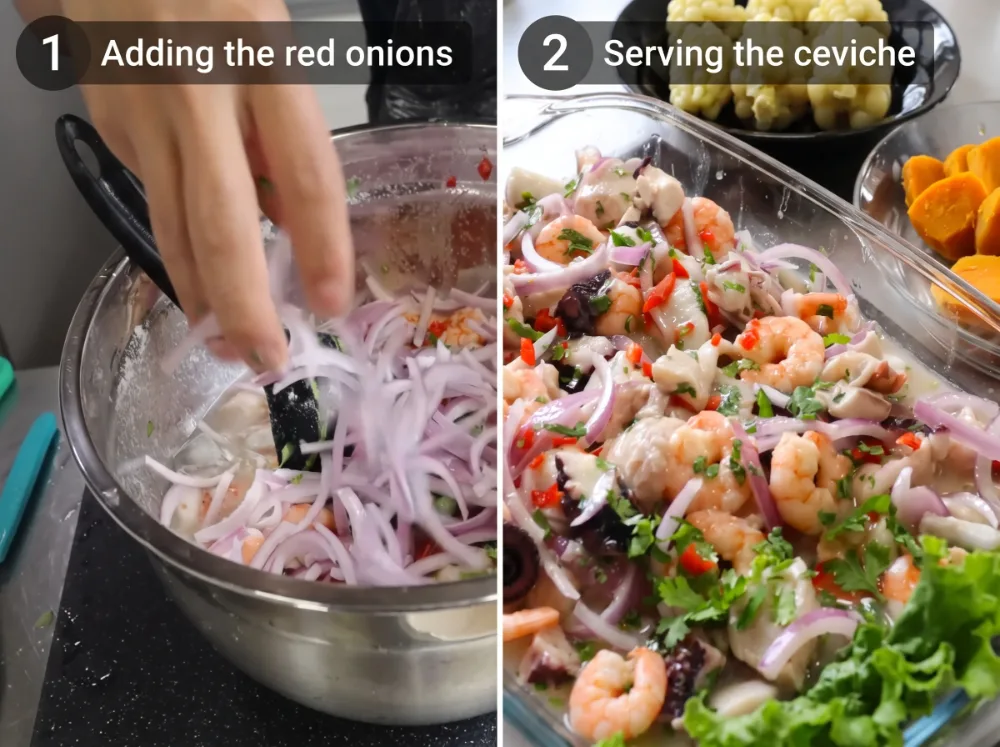
Incorporate the poached seafood and iced red onions, mounding high on chilled plates garnished with sweet potato, choclo, and cancha.
Chef's Pro Tip:Ladle the cold Leche de Tigre generously over every portion and serve immediately while ice-cold.

Peruvian Ingredients in the US: Where to Buy & Easy Substitutes

Cooking authentic Peruvian food in the United States is easier than ever! Most signature ingredients are readily available at major supermarkets, Latin grocers, or online. Here is our tested guide for American home cooks:

Fresh White Fish (Corvina, Sea Bass, or Halibut)
Where to buy in US: Whole Foods, Asian fish markets (H-Mart), or local seafood fishmongers.
Closest US substitute: Use wild flounder, red snapper, striped bass, or sashimi-grade tilapia fillets.
Peruvian Ají Limo (or Rocoto)
Where to buy in US: Latin grocery stores (frozen or fresh in Goya/El Sol sections) or online produce distributors.
Closest US substitute: Substitute with 1 fresh habanero (for floral heat) or red Fresno chili peppers for bright red color and mild spice.
Fresh Calamari & Squid Tubes
Where to buy in US: Supermarket fish counters or frozen 1 lb boxes at Trader Joe's and Asian supermarkets.
Closest US substitute: Cleaned wild squid tubes cut into rings, or tender baby cuttlefish.
Peruvian Giant Choclo & Cancha
Where to buy in US: Frozen section in Latin supermarkets (Goya or Inca's Food brands) or Amazon.
Closest US substitute: Boiled sweet white corn on the cob or hominy kernels for choclo; Spanish corn nuts for cancha.
Authentic Peruvian Recipe

Peruvian Ceviche Mixto (Mixed Seafood & Fish Ceviche)

Recipe by My Peruvian Kitchen Culinary Team

Pin
Prep Time20 mins
Cook Time5 mins
Total Time25 mins
DifficultyIntermediate
Rating
4.98(38)
Servings:
Units:

Ingredients(Check items off as you cook)

  • 1 lbFresh sashimi-grade white fish fillet (corvina, sea bass, or halibut), cut into 3/4-inch cubes
  • 1/2 lbCleaned calamari rings and small tentacle pieces
  • 1/2 lbRaw shrimp (medium 26/30 count), peeled, deveined, and tail-off
  • 1/3 lbCooked octopus (pulpo cocido), sliced into thin bite-sized coins(optional but traditional for premium mixto)
  • 1/4 lbSmall tender clams or bay scallops(cleaned and steamed)
  • 10 wholeFresh key limes or juicy limes (freshly hand-squeezed)(approx. 3/4 cup / 180 ml fresh juice)
  • 1 mediumMedium red onion, sliced into paper-thin julienne plumes and rinsed in ice water
  • 1.5 chiliFresh ají limo (or rocoto), seeded and finely minced (reserve a few rings for garnish)
  • 1 tbspFresh celery stalk (apio), finely grated or finely minced for the aromatic base
  • 1 cloveGarlic clove, pressed into a smooth paste
  • 1/4 tspFresh ginger juice (kión), squeezed from grated root(subtle touch for restaurant aroma)
  • 2 tbspFresh cilantro leaves (culantro), finely chopped
  • 1.5 tspFine sea salt (to taste)
  • 3 cubesSolid clear ice cubes (for temperature control during mixing)
  • 1 largeCooked sweet potato (camote sancochado), sliced into thick rounds
  • 1 cupBoiled giant Peruvian choclo corn kernels
  • 1/2 cupCrispy toasted Peruvian cancha corn nuts & crisp lettuce leaves

Step-by-Step Instructions

  1. 1

    Flash-Poach and Ice-Shock the Mixed Seafood

    Bring a saucepan of salted water with a squeeze of lime and a slice of ginger to a rolling boil. Drop in the shrimp and calamari rings and flash-cook for exactly 60 to 75 seconds until the shrimp turn pink and opaque and the calamari curls. If using raw clams or scallops, blanch for 45 seconds. Immediately transfer with a spider strainer into a large bowl of ice water to halt cooking instantly. Once chilled, drain thoroughly and pat dry on clean towels. Slice the pre-cooked octopus into thin coins and combine with the chilled seafood.
    Chef's Pro Tip: Drying the poached seafood thoroughly on paper towels prevents excess cooking water from diluting the acidity of your lime juice.
  2. 2

    Cube Fresh Fish & Create the Aromatic Cold Base

    Using a sharp slicing knife, cut your cold white fish fillet into clean, uniform 3/4-inch cubes. Place the fish cubes in a chilled stainless steel or glass mixing bowl. Sprinkle with the 1.5 teaspoons of fine sea salt, the garlic paste, finely grated celery (apio), and a few drops of ginger juice. Add 2 to 3 solid ice cubes. Toss gently with a stainless steel spoon for 30 to 45 seconds. The friction of the salt and cold extracts myosin proteins from the fish, forming a silky foundation for the Leche de Tigre.
    Chef's Pro Tip: Adding celery and a subtle drop of ginger juice is the trade secret of Lima's top cebicherías, giving the marinade deep savory complexity.
  3. 3

    Hand-Squeeze Fresh Limes (The 3-Minute Emulsion)

    Cut your fresh limes in half. Squeeze them by hand directly over the seasoned fish bowl, pressing each lime only about 60% of the way—never squeeze completely to the bitter white pith. Add the minced ají limo (or rocoto) and chopped cilantro. Stir continuously in a gentle circular motion for 60 to 90 seconds. Watch as the clear citrus juices emulsify with the cold fish proteins into an opaque, creamy, ivory Leche de Tigre.
    Chef's Pro Tip: Never squeeze limes using a heavy mechanical lever squeezer for ceviche; gentle manual squeezing avoids releasing bitter rind terpenes.
  4. 4

    Incorporate Poached Seafood & Crisp Red Onions

    Fold the dried poached calamari, shrimp, and sliced octopus into the bowl. Toss together for 30 seconds so all the seafood absorbs the zesty Leche de Tigre. Add the ice-bathed, drained red onion julienne during the final 20 seconds of tossing so the onion stays exceptionally crisp and crunchy. Taste the broth and adjust with an extra pinch of sea salt if needed. Remove and discard the remaining unmelted ice cubes.
    Chef's Pro Tip: Rinsing sliced red onions in iced salt water removes harsh sulfur compounds while maintaining vibrant color and snap.
  5. 5

    Plate Immediately on Chilled Dish with Traditional Sides

    Line four chilled serving plates or shallow bowls with fresh lettuce leaves. Spoon a generous base of sweet potato slices and giant choclo corn kernels on the side. Mound the Ceviche Mixto high in the center, ensuring a gorgeous balance of fish, curls of calamari, pink shrimp, and octopus coins. Ladle plenty of icy Leche de Tigre broth generously over the seafood. Garnish with ají limo rings, extra cilantro, and serve immediately with a side bowl of crunchy cancha corn.
    Chef's Pro Tip: Serve with a soup spoon rather than just a fork so every spoonful delivers the restorative Leche de Tigre broth!

Nutrition Facts

4 servings per recipe • Amount per serving

Calories235
Total Fat 2.8gDaily Value*
Sodium 590mg32%
Total Carbohydrate 15g14%
Dietary Fiber 2g16%
Protein 36gRich in Protein

* Percent Daily Values are based on a 2,000 calorie diet. Your daily values may be higher or lower depending on your calorie needs.

© 2026 MyPeruvianKitchen.com. Tested and published for home cooks. All rights reserved.

Frequently Asked Questions

Expert Answers for Peruvian Ceviche Mixto (Mixed Seafood & Fish Ceviche)

The secret is three-fold: salting the cold white fish first with ice cubes to draw out proteins, adding a touch of finely grated celery (apio) and garlic paste for savory backbone, and hand-squeezing fresh limes gently so bitter pith oils never enter the bowl.
MPK
About The Culinary Team

My Peruvian Kitchen Culinary Team

Our culinary team brings together passionate native Peruvian cooks, culinary educators, and food writers. Our mission at MyPeruvianKitchen.com is helping US home cooks master authentic, restaurant-quality Peruvian dishes with ingredients easily found in American grocery stores.